From our sites
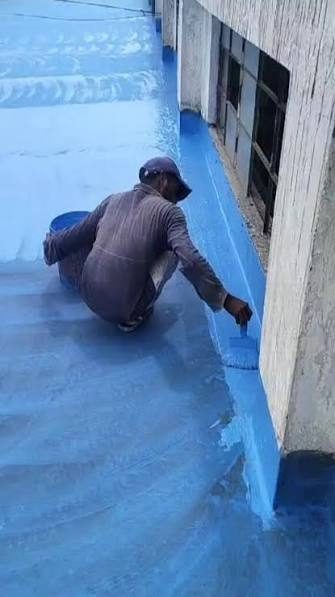
Most waterproofing failures start at a joint or detail, not in the open field of the membrane — which is why detailing matters as much as material choice.
Request a quoteWater ingress is one of the most common and most expensive causes of long-term building damage — corroding reinforcement steel, degrading concrete, causing mould and damaging finishes and equipment. In basements and podiums, groundwater pressure makes the consequences of a failure especially costly to repair after the fact, since remediation often means excavation or demolition of finished work.
Getting waterproofing right at construction stage is dramatically cheaper than fixing a leak once the structure is occupied and finished.
Modified bitumen membranes (APP or SBS) are widely used for roofs and terraces. Liquid-applied polyurethane membranes suit complex geometries and roof detailing. Cementitious coatings are common for basements and water tanks where a rigid, bonded system is acceptable. Crystalline waterproofing works by reacting with moisture inside the concrete itself to block capillary paths, useful for water-retaining structures. Integral admixtures are added to the concrete mix at the batching stage rather than applied afterward.
A correctly detailed and installed waterproofing system protects the structure for decades and avoids the disruption of remediation work in an occupied building. Because most failures originate at expansion joints, construction joints and penetrations rather than the open membrane field, getting these details right is often more consequential than the base material choice.
A failure typically isn't discovered until well after handover, by which point the fix usually costs several times what correct installation would have cost.
| Method | Pros | Cons |
|---|---|---|
| Modified bitumen membrane | Proven long track record, good for large flat roof areas | Torch-applied variants need skilled labour and fire-safety precautions on site |
| Liquid-applied PU | Seamless, conforms to complex details and penetrations | Application quality highly dependent on surface prep and weather conditions |
| Cementitious coating | Good bond to concrete, straightforward application, cost-effective for basements/tanks | More rigid — less tolerant of structural movement/cracking than membrane systems |
| Crystalline | Self-healing for hairline cracks; durable within the concrete itself | Only suitable where concrete is directly exposed to water; not a surface coating solution for all details |
Volz treats joint and detail design as a first-order concern rather than an afterthought, and matches membrane or coating system to the specific exposure — terrace, basement, podium or water-retaining structure — rather than applying one system everywhere.