From our sites
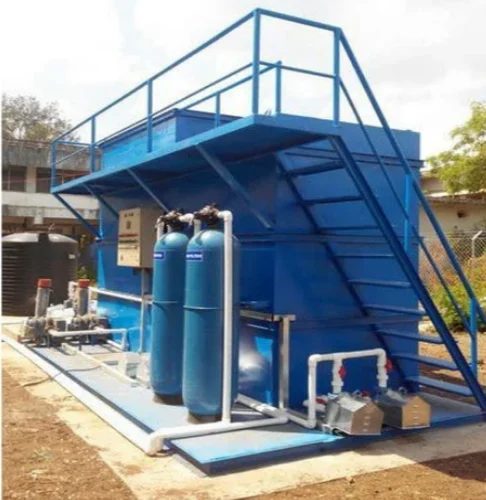
Discharge norms are non-negotiable — and the right STP technology depends heavily on the site's space, load pattern and reuse goals.
Request a quoteUntreated or poorly treated sewage discharged into the environment is both an environmental hazard and, in virtually every jurisdiction, a regulatory violation with real financial and legal consequences. For campuses, factories and commercial buildings, an on-site sewage treatment plant (STP) is often mandatory above a certain occupancy or discharge volume.
Beyond compliance, a well-run STP allows treated water to be reused for landscaping, flushing or cooling — reducing a facility's fresh-water demand.
Sequential Batch Reactor (SBR) systems treat sewage in timed batches within a single tank, offering a compact footprint and flexible operation. Moving Bed Biofilm Reactor (MBBR) systems use plastic media to host bacteria, handling variable loads well in a relatively small footprint. Extended aeration / activated sludge process (ASP) is a well-established, simpler-to-operate continuous-flow method, typically needing a larger footprint. Tertiary treatment (filtration, UV, or UF/RO polishing) is added after any of these when the treated water needs to meet reuse-grade quality rather than just discharge norms.
Correct sizing against actual hydraulic and organic (BOD/COD) loading is what determines whether an STP consistently meets discharge norms or intermittently fails compliance — undersized plants are a common cause of exceedances during peak occupancy. A properly designed plant also has lower operating cost per unit treated and a longer service life for its mechanical and biological components.
For facilities pursuing green building certifications, an efficient STP with reuse capability is frequently a direct contributor to the rating.
| Method | Pros | Cons |
|---|---|---|
| SBR | Compact footprint, flexible for variable loads, good effluent quality | More complex automation and control requirements |
| MBBR | Handles load variation well, relatively compact, robust biology | Media replacement/maintenance is an ongoing cost |
| Extended aeration / ASP | Simple, well-understood operation, lower technical skill needed to run | Larger land footprint required |
| Tertiary / UF-RO polishing | Enables water reuse, reduces fresh-water demand | Added capital and operating cost on top of the base STP |
Volz sizes sewage treatment plants against actual hydraulic and organic loading and the applicable discharge norms, rather than a standard catalogue unit, and can add tertiary treatment where treated water is intended for reuse.