From our sites
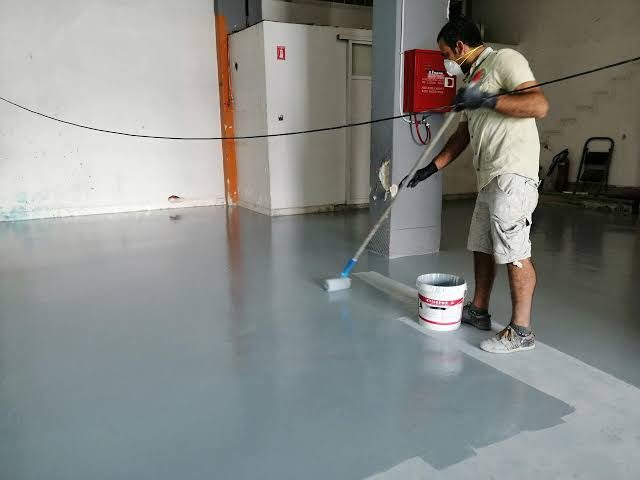
Seamless resin flooring protects the single most heavily used surface in any facility. Here's what to know before you specify one.
Request a quoteFloors in a factory, warehouse or process facility take more sustained abuse than almost any other surface in the building — forklift and pallet-truck traffic, chemical spills, thermal cycling, abrasion from foot and wheeled traffic, and in food or pharmaceutical settings, strict hygiene requirements. A standard concrete slab is rarely built to withstand this on its own; it dusts, cracks, absorbs contaminants and becomes difficult to clean.
A properly specified resin floor extends the working life of the slab, reduces maintenance downtime, supports safety (slip resistance, static control, line-marking for traffic management) and, in regulated industries, is often a compliance requirement rather than a preference.
The main resin flooring families are epoxy self-levelling screeds, polyurethane (PU) broadcast or screed systems, methyl methacrylate (MMA) systems, and polished/densified concrete as a non-resin alternative. Within epoxy and PU, formulations vary further — standard trafficable coatings, high-build broadcast systems for heavy wheeled traffic, and static-dissipative (ESD) formulations for electronics environments.
Selection depends on chemical exposure, traffic type and load, thermal shock resistance needed, required cure time, and hygiene requirements.
A correctly specified floor typically lasts 10–15+ years under industrial conditions with minimal intervention, supports faster cleaning cycles, and avoids the production downtime that comes with re-flooring an operating facility. It also has direct safety and compliance implications: slip resistance ratings, ESD flooring in electronics assembly, and hygienic coving in food-grade areas are often audited by clients, insurers or regulators.
Getting it wrong is expensive twice over — once in premature failure (delamination, cracking, dusting) and again in the lost production time needed to redo the work, often on a live site.
| Method | Pros | Cons |
|---|---|---|
| Epoxy self-levelling | High compressive strength, chemical resistance, smooth hygienic finish, cost-effective for standard duty | Can be brittle under thermal shock; less UV-stable outdoors |
| PU broadcast / screed | Better thermal shock and impact resistance than epoxy; good for heavy wheeled traffic and food-grade wet areas | Generally higher cost than standard epoxy; more sensitive to application conditions |
| MMA systems | Very fast cure (can be trafficable within hours) — useful where downtime is critical | Strong odour during application; typically a cost premium |
| Polished / densified concrete | Lower cost, no coating to delaminate, low maintenance | Less chemical resistance and hygiene control than resin systems; not suitable for all process environments |
Volz engineers flooring to the facility's actual duty rather than a generic mix — substrate testing, load calculation and finish selection are handled in-house, then delivered under one contract from design through commissioning.