From our sites
Passive design and good intentions don't put out fires. Here's how properly engineered suppression systems do.
Request a quoteFire is one of the few risks that can destroy a facility, halt production and cost lives within minutes. Firefighting systems — sprinklers, hydrants, hose reels, fire pumps and suppression agents — exist to detect and control fire long before manual intervention is possible, buying time for evacuation and limiting property and business-continuity loss.
Beyond life safety, most jurisdictions require certified fire protection systems as a condition of occupancy, and insurers price premiums directly against the quality and certification of a building's fire protection.
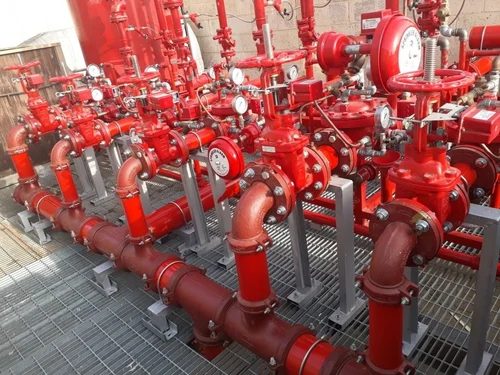
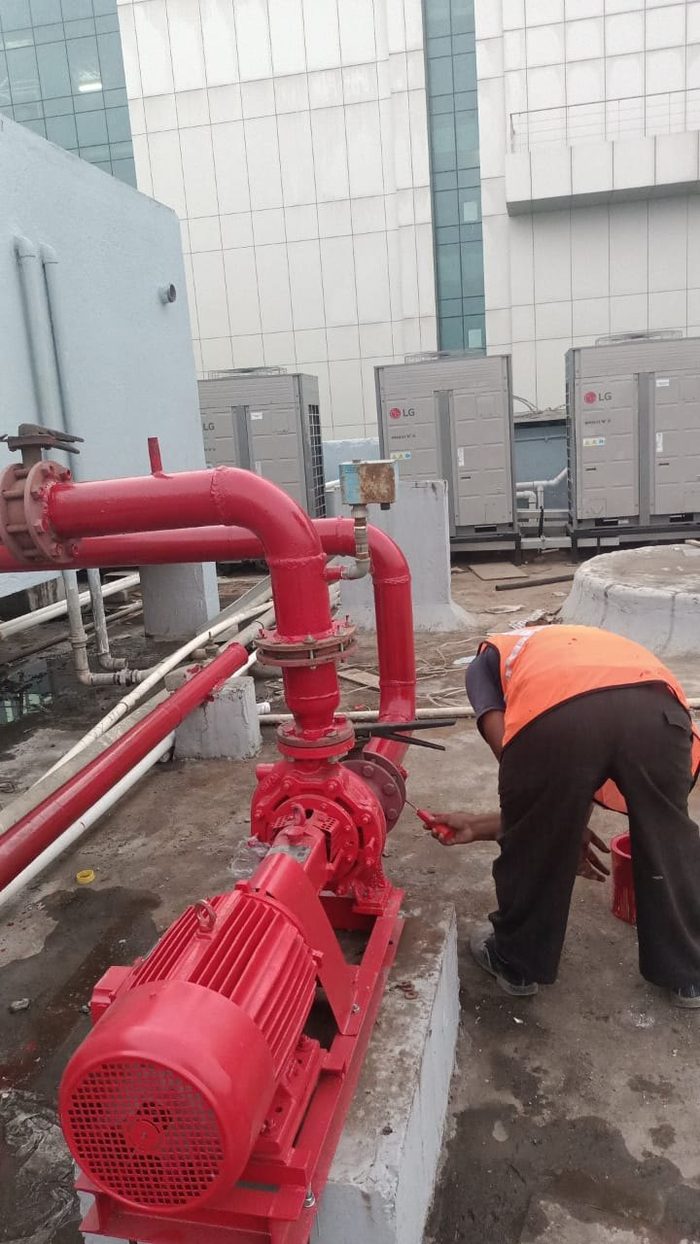
Automatic sprinkler systems (wet pipe, dry pipe, pre-action and deluge configurations) remain the most common method for general building and industrial risk. Hydrant and hose reel systems provide manual firefighting capability for occupants and fire services. Gaseous clean-agent suppression protects areas where water damage is unacceptable (server rooms, switchgear rooms, archives). Foam-based systems are used for flammable-liquid risks such as fuel storage. Fire pump rooms — with jockey, duty and standby pumps — supply the water pressure and flow all of the above depend on.
NFPA data and insurance industry studies consistently show that sprinklered buildings experience dramatically lower fire deaths and reduced property loss compared to unsprinklered buildings of similar occupancy. Beyond the direct life-safety and loss impact, a certified, well-documented fire protection system is frequently a precondition for a fire NOC (no-objection certificate), building occupancy approval, and favourable insurance terms.
An under-designed or poorly maintained system creates a false sense of security — the worst outcome, since it fails exactly when it's needed.
| Method | Pros | Cons |
|---|---|---|
| Wet pipe sprinklers | Simplest, fastest-reacting, lowest-cost sprinkler configuration | Not suitable for freezing environments or areas needing delayed discharge |
| Pre-action / deluge | Reduces accidental discharge risk; deluge gives full-area coverage for high-hazard areas | More complex control systems; higher installation and maintenance cost |
| Gaseous clean-agent | No water damage to sensitive equipment; fast suppression | Significantly higher cost; requires sealed room integrity to be effective |
| Foam systems | Effective on flammable-liquid fires that water alone won't control | Requires foam concentrate storage and proportioning equipment; ongoing consumable cost |
Volz designs firefighting systems against the occupancy's actual hazard classification and hydraulic requirements — not a copy-paste specification — then supplies, installs and commissions the full system including statutory sign-off.