From our sites
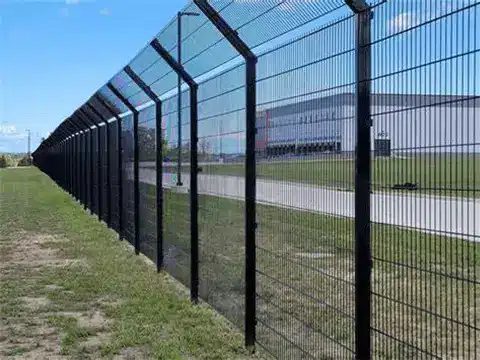
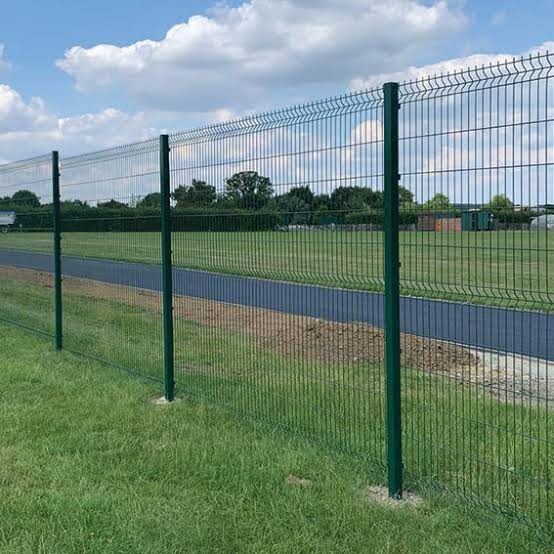
Perimeter fencing is the first and often most overlooked layer of a facility's security strategy.
Request a quoteFencing is the first line of defence for any industrial site, campus or boundary — deterring casual intrusion, defining the legal and physical boundary of the property, and supporting the rest of a site's security plan (CCTV coverage, access control, patrol routes) by controlling where people can physically be.
For industrial and construction sites specifically, fencing is also a safety requirement — keeping unauthorized people away from active machinery, excavations, and hazardous storage areas.
Welded mesh fencing offers a rigid, hard-to-climb panel system common for industrial and commercial boundaries. Chain-link fencing is a lower-cost, flexible option for general boundary marking. Palisade fencing (vertical steel pales with pointed tops) is a traditional high-security option. Anti-climb mesh (small aperture, smooth-faced panels) and concertina or razor-wire coils are added where the risk profile calls for a stronger deterrent.
A properly specified perimeter measurably reduces unauthorized access incidents and supports insurance and liability positions by demonstrating a genuine security effort, not just a boundary marker. It also reduces false alarms on other security systems (like intrusion detection) by physically preventing casual incursions from ever reaching detection zones.
An under-specified fence — the wrong height, easily climbable mesh, or poor post spacing — is a visible weak point that undermines the rest of a site's security investment.
| Method | Pros | Cons |
|---|---|---|
| Welded mesh | Rigid, difficult to climb or cut, clean industrial appearance | Higher cost than chain-link |
| Chain-link | Low cost, quick to install, widely available | Easier to climb or cut; lower security value |
| Palisade | Strong visual deterrent, difficult to scale | Higher material and installation cost; less common for very long runs |
| Anti-climb mesh + razor wire | Highest deterrent level for high-security sites | Higher cost; may require additional signage/safety consideration due to razor wire |
Volz specifies fencing to the site's actual risk profile — mesh gauge, height, and anti-climb detailing sized to what the perimeter genuinely needs to resist, then supplies and installs it end to end.