How it's engineered
Typical System Schematic
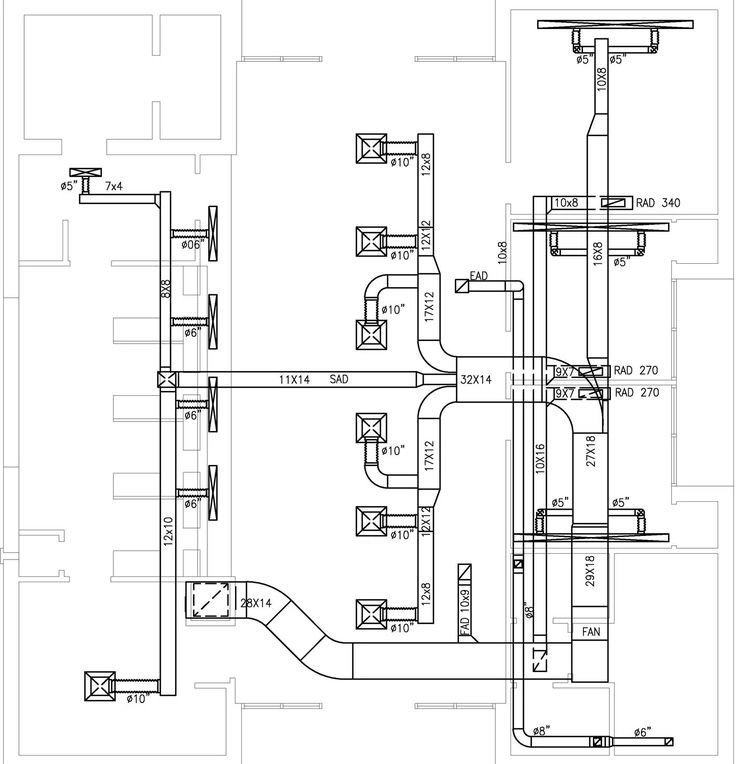
Typical ductwork riser layout — duct sizing, diffuser placement and AHU connections engineered before installation begins
Heating, ventilation and air conditioning shape energy cost, comfort and process control for the life of a building.
Request a quoteTypical ductwork riser layout — duct sizing, diffuser placement and AHU connections engineered before installation begins
HVAC affects three things simultaneously: occupant comfort and productivity, energy cost (HVAC is typically the largest single energy consumer in a commercial or light-industrial building), and — in many industrial settings — process control, where temperature and humidity directly affect product quality (pharmaceuticals, electronics, food processing, data centres).
An undersized or poorly controlled system shows up immediately in complaints and energy bills; an oversized one wastes capital and still performs poorly, since HVAC equipment is inefficient when it constantly cycles on and off.
VRF/VRV (variable refrigerant flow) systems dominate mid-size commercial retrofits and multi-zone buildings for their flexibility and efficiency. Ducted split systems suit smaller, simpler layouts. Chilled-water plants (with air handling units, or AHUs, distributing conditioned air) are standard for large commercial and industrial facilities where centralized capacity and long duct runs are needed. Package units are common for standalone industrial sheds and retail.
Correctly sized and controlled HVAC typically accounts for meaningful, measurable reductions in a building's energy bill compared to an over- or under-sized system, and directly affects occupant productivity and, in process environments, product yield and quality consistency. BMS integration adds the ability to monitor and adjust performance rather than discovering problems after energy bills or complaints arrive.
Poor design shows up as hot/cold spots, high humidity (mould risk), excessive energy use, and — in cleanrooms or cold chains — product loss.
| System | Pros | Cons |
|---|---|---|
| VRF / VRV | High efficiency, flexible zoning, simultaneous heating/cooling in different zones | Higher upfront cost than simple split systems; requires trained maintenance |
| Ducted split | Lower cost, simpler installation and maintenance | Less zoning flexibility; less efficient at larger scale |
| Chilled water + AHU | Scales well for large facilities; centralized maintenance | High upfront capital cost; needs dedicated plant room and pumping infrastructure |
| Package units | Fast to install, self-contained, good for standalone sheds | Limited zoning; roof or ground-level footprint required |
Volz sizes HVAC systems from actual cooling-load calculations rather than rules of thumb, and coordinates ductwork, controls and BMS integration as one engineered package rather than separate trades.