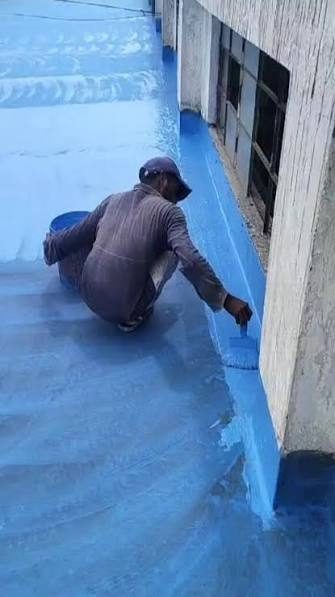
Below-grade waterproofing has to solve a different problem than roof or podium waterproofing: constant hydrostatic pressure pushing groundwater toward the structure rather than gravity pulling surface water away from it. Treating a basement or tunnel like an above-grade waterproofing problem is one of the most common and expensive design mistakes in Indian construction.
Where access to the exterior face of the structure is possible during construction, positive-side (external) membrane systems — sheet membranes or applied liquid membranes — are the preferred first line of defense, since they block water before it ever reaches the structural concrete. This requires sequencing waterproofing into the construction program before backfill, which is why waterproofing scope has to be locked in early rather than treated as a finishing-stage add-on.
On retrofit projects, or where the water table is high and excavation to the exterior face isn't practical, negative-side systems — crystalline waterproofing coatings, interior drainage membranes coupled with a perimeter drainage channel and sump pump — manage water that has already reached the interior face rather than blocking it outside. These systems don't stop water ingress at the wall the way positive-side membranes do; they intercept and redirect it, which is why the drainage and pumping capacity has to be sized correctly, not treated as a backup detail.
The single biggest input into a below-grade waterproofing design is the site's actual hydrostatic head — the height of the water table above the lowest structural slab — measured through geotechnical investigation, not assumed from a nearby site's data. Getting this wrong in either direction is costly: underestimating it leads to water ingress and later remediation; overestimating it means paying for redundant membrane systems the site never needed.
Volz designs, supplies, installs and commissions this scope under one contract, engineered to recognized codes and standards for facilities across Pan India, Nepal, Bhutan and Bangladesh.