Perimeter fencing is often specified late in a project and treated as a commodity line item, but for industrial sites, warehousing and especially data centers, the fencing type and detailing materially affects the actual security level delivered — not just the appearance of security.
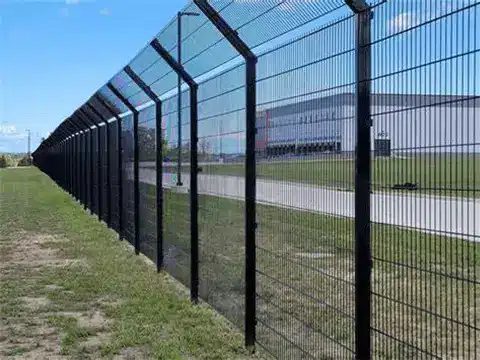
Anti-climb (weldmesh) fencing uses small aperture sizes and rigid panel construction specifically to remove toe- and fingerholds, making the fence itself difficult to scale regardless of height. It's well suited to sites where visibility through the fence line is acceptable or desirable — warehousing, industrial yards, most commercial perimeters — and where an attractive, lower-visual-impact barrier matters alongside security.
Palisade fencing (vertical steel pales with pointed or W/D-section profiles) delivers a higher deterrence and higher perceived-threat barrier, commonly specified for data centers, substations, and critical infrastructure where the consequence of a breach is severe enough to justify its more imposing appearance and generally higher cost. The pale spacing and pointed-top detailing are what make it genuinely harder to climb or breach compared to standard chain-link, not just its height.
The right specification decision starts from what's actually being protected and from whom — general trespass deterrence, organized theft of materials or equipment, or a security-classified facility with strict access control requirements — rather than defaulting to whichever fence type was used on the last project. For data centers and similarly sensitive sites, fencing is also increasingly specified alongside CCTV coverage and access-controlled gates as one integrated perimeter security system, not as a standalone barrier.
Volz designs, supplies, installs and commissions this scope under one contract, engineered to recognized codes and standards for facilities across Pan India, Nepal, Bhutan and Bangladesh.